What Is an IP Lookup?
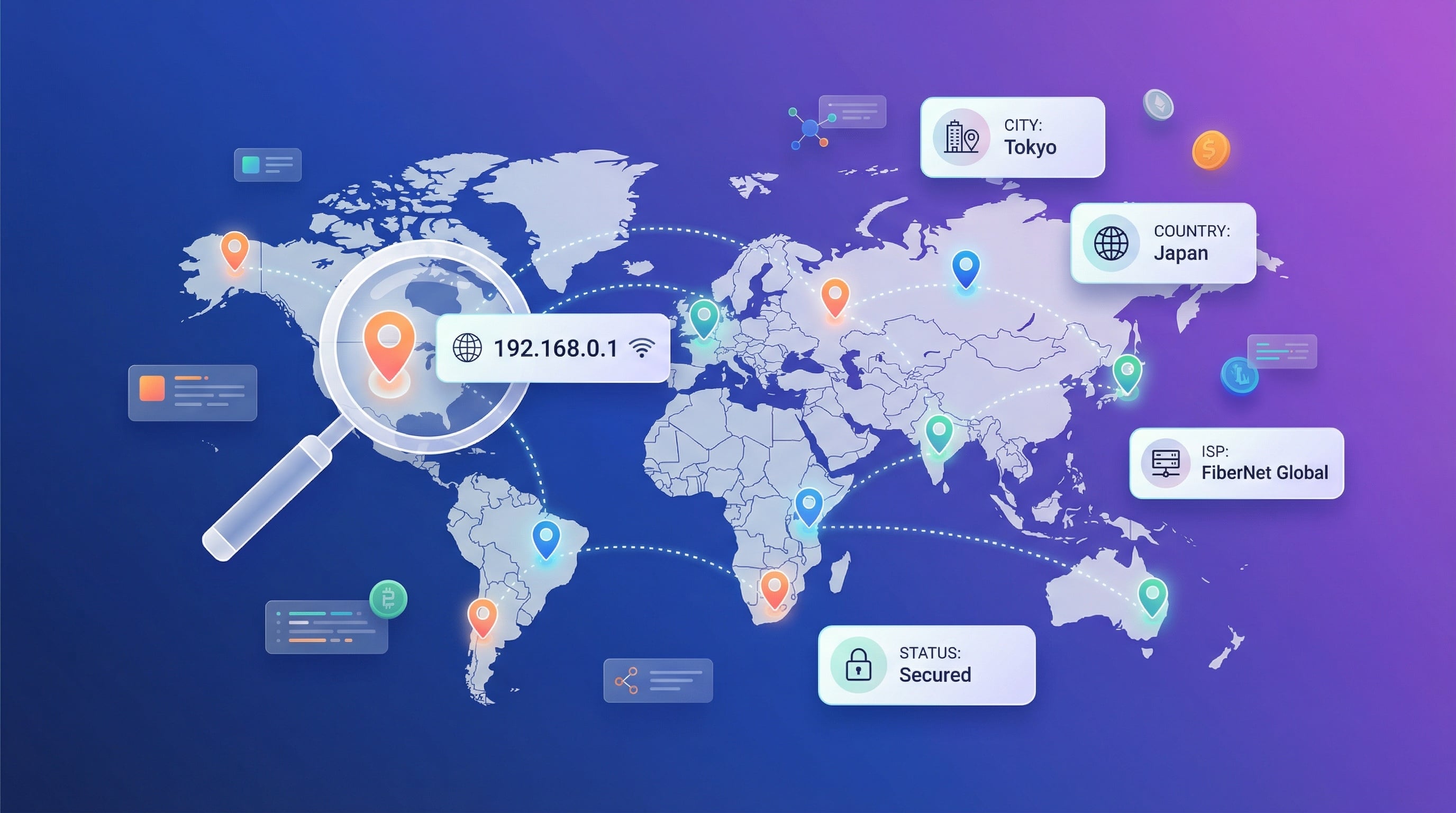
An IP lookup (also called IP address lookup) is the process of querying databases to find geolocation and network information associated with an IP address. Every device connected to the internet has a unique IP address assigned by its Internet Service Provider (ISP). By performing an IP geolocation lookup, you can determine the approximate physical location, ISP, organization, AS number, timezone, and other metadata linked to that address.
DNS Robot's free IP checker connects to real-time IP intelligence databases to provide accurate geolocation data for any IPv4 or IPv6 address. Unlike basic IP location tools, our IP address checker shows complete details including hostname, anycast detection, postal code, and precise latitude/longitude coordinates — everything you need for security analysis, fraud detection, and network troubleshooting.
How to Look Up an IP Address
There are several ways to check an IP address location and details. Our online IP lookup is the fastest method, but knowing alternatives helps for advanced use cases.
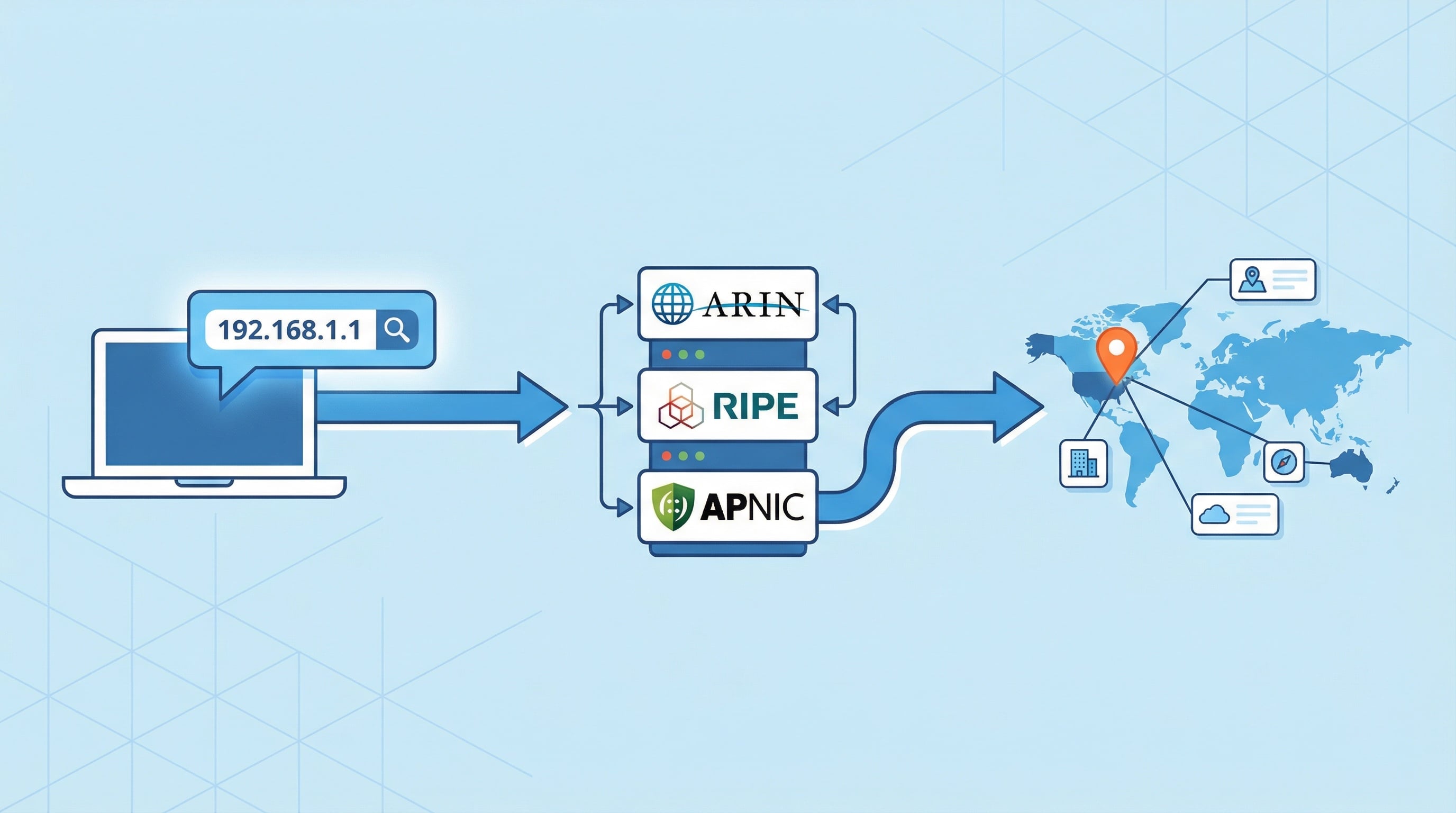
nslookup 8.8.8.8 or dig -x 8.8.8.8 to perform reverse DNS lookup. This shows the hostname but not geolocation. Use our Reverse DNS tool for a web-based alternative.whois 8.8.8.8 to see IP registration details including the organization, address block allocation, and abuse contact. For domain WHOIS, use our WHOIS Lookup.What Information Does an IP Lookup Reveal?
Our IP address lookup tool retrieves comprehensive information from real-time databases. Here's what each field means and how it's useful.
Geolocation Data
Country, region/state, city, postal code, and latitude/longitude coordinates. Accuracy ranges from 95-99% at country level to 50-80% at city level.
ISP & Organization
The Internet Service Provider and organization that owns the IP block. Helps identify if traffic comes from a hosting provider, ISP, or enterprise network.
AS Number (ASN)
The Autonomous System Number identifies which network controls the IP. Used in BGP routing and helps identify the network operator (e.g., AS15169 = Google, AS13335 = Cloudflare).
Timezone & Hostname
The timezone associated with the IP's location and the reverse DNS hostname (e.g., dns.google for 8.8.8.8). Useful for log analysis and scheduling.
IP Lookup Use Cases
IP Address Privacy & Limitations
IPv4 vs IPv6 — Understanding IP Address Formats
Our IP address lookup supports both formats. Understanding the difference helps when analyzing network traffic and configuring infrastructure.
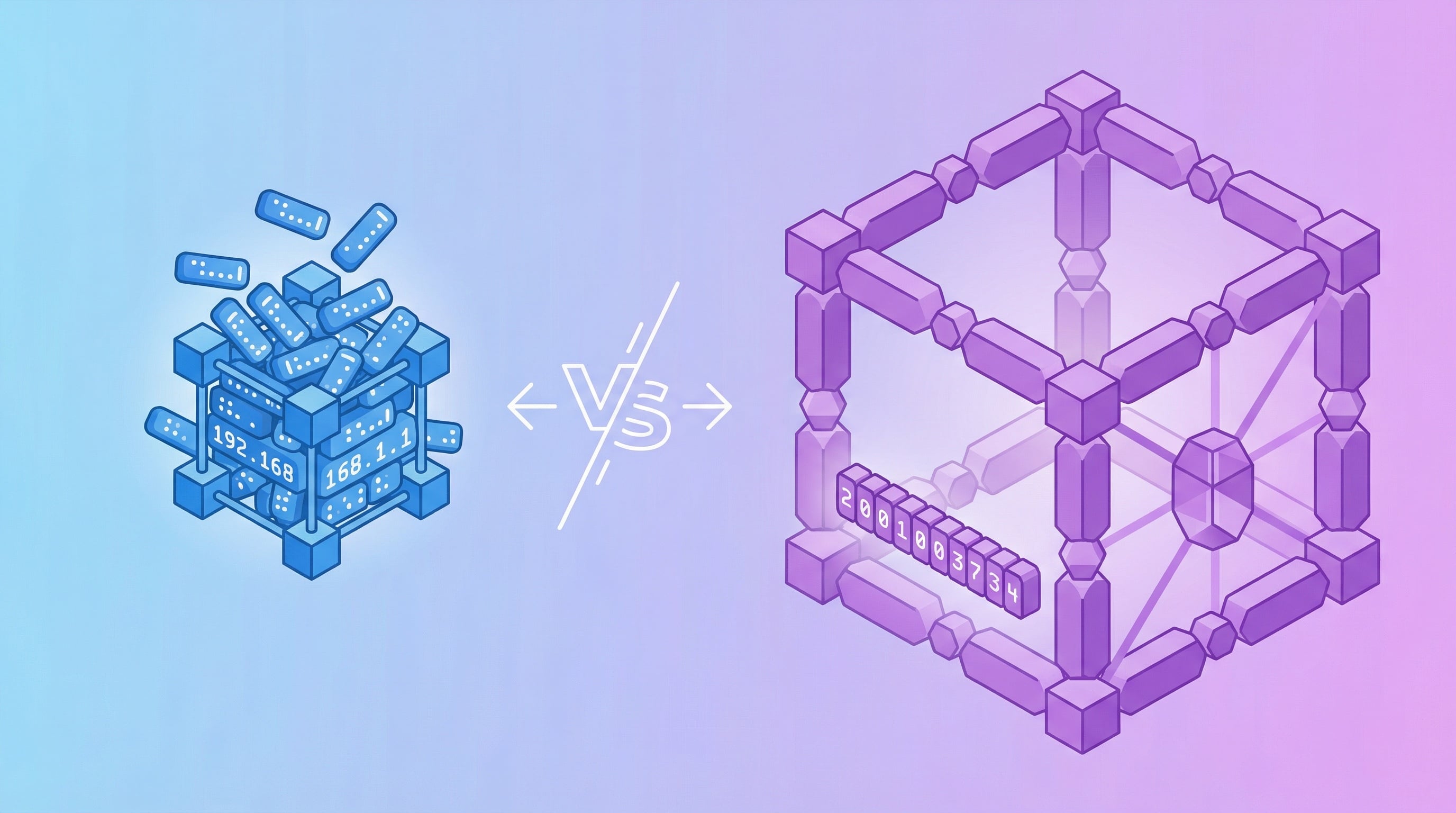
IPv4 (Internet Protocol v4)
- Format: 32-bit, written as four decimal octets (e.g.,
192.168.1.1) - Address Space: ~4.3 billion unique addresses (2^32) — nearly exhausted globally
- Usage: Still dominates internet traffic (~75%). Supported by all devices and networks.
IPv6 (Internet Protocol v6)
- Format: 128-bit, written in hexadecimal groups (e.g.,
2001:4860:4860::8888) - Address Space: 340 undecillion addresses (2^128) — effectively unlimited
- Usage: Growing adoption (~25%). Major providers (Google, Cloudflare, Facebook) fully support IPv6.
IP Lookup Best Practices
- Cross-reference IP data with multiple sources for accuracy
- Check the IP Blacklist for reputation data alongside geolocation
- Use Reverse DNS to verify hostname matches the organization
- Remember city-level accuracy is 50-80% — don't use for precise pinpointing
- Log suspicious IPs and monitor patterns over time, not single lookups
- Check if IP is anycast before drawing geographic conclusions
- Comply with GDPR and privacy regulations when storing IP data
- Combine with DNS Lookup for complete domain-to-IP-to-location analysis
Related Network & Security Tools
Look up A, AAAA, MX, CNAME, and all DNS records to find the IP behind any domain.
Convert an IP address back to its hostname with PTR record lookup.
Check if an IP is listed on spam or abuse blacklists for reputation analysis.
Verify the SSL certificate of the server behind an IP address.
Trace the network path from our server to any IP address or domain.
Check if DNS changes have propagated to see which IPs resolve globally.